China Top 10 Digital Health Trends Changing Healthcare

Time:2026-11-23 Author:Amelia
0%

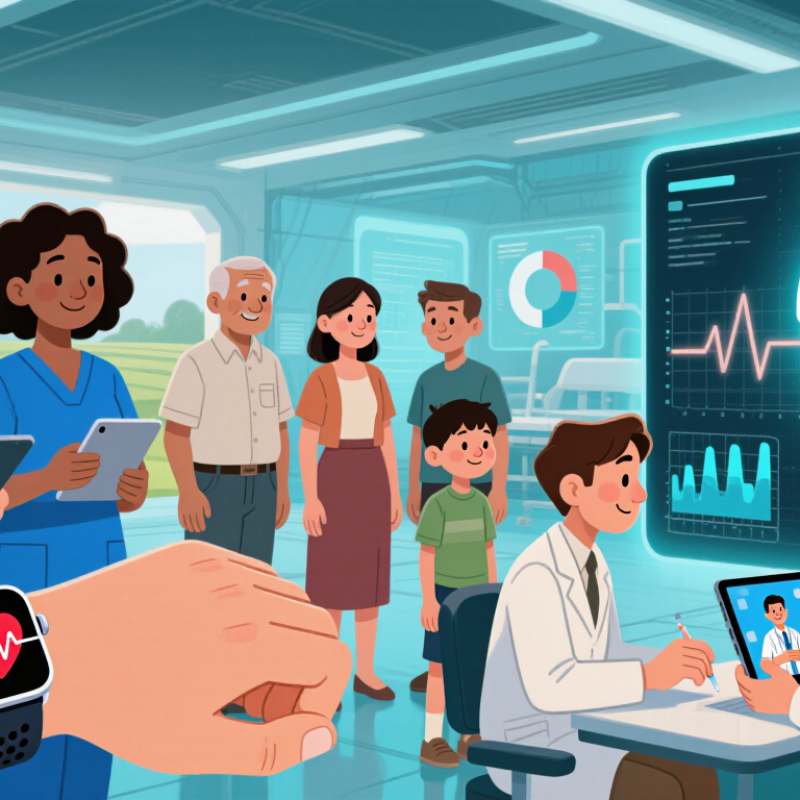
Healthcare is moving beyond clinic walls. A smartwatch can flag an irregular heartbeat during a morning walk. A video visit can connect a rural patient with a specialist hundreds of miles away. These changes make one question urgent: how does digital health change modern healthcare? It changes how people access care, how clinicians use information, and how health systems follow patients between appointments.

Digital medicine expert and cardiologist Eric Topol offers a useful perspective in Deep Medicine: “The greatest opportunity that artificial intelligence offers is not to reduce errors or workloads, or even to cure cancer: it is to restore the human connection.” His point matters. Technology should support thoughtful care, not replace the conversation between patient and clinician. That distinction is easy to lose when new tools promise speed.

This overview explores ten trends reshaping healthcare, including artificial intelligence, telehealth, remote patient monitoring, wearable devices, and personalized medicine. Some tools can help clinicians spot patterns sooner or give patients more convenient access to support. Others may add alerts, confusing interfaces, or new demands on already busy teams. Not every app helps. And access remains uneven, especially for people without reliable internet, suitable devices, or confidence using digital services. These limits deserve attention alongside the benefits. The following trends show where digital health is making practical changes, what those changes may mean for patients and professionals, and where careful evaluation is still needed.
China Top 10 Digital Health Trends Changing Healthcare

Understanding Digital Health and Its Role in Modern Care

Digital health is more than a video appointment. It connects clinical records, remote monitoring, decision-support tools, and patient communication. OECD’s Health at a Glance 2023 reported that teleconsultations represented about 19% of doctor consultations in 2021, compared with 11% in 2019 across reporting countries. Care changed quickly. That is progress, not proof.

Used well, digital tools can help clinicians follow blood pressure readings between visits, spot gaps in care, and share updated information with patients. A nurse reviewing a home reading may notice a concerning trend before the next scheduled appointment. Still, technology cannot replace careful listening or a physical examination when one is needed. Poor internet access, confusing interfaces, and fragmented records can leave some people behind. Better access requires thoughtful design, staff training, and clear privacy practices.

Tips: Choose a secure patient portal, keep medication and allergy details current, and ask how remote readings will be reviewed. If a device or app feels difficult to use, say so. Convenience matters, but so does human follow-up.

The Technologies Powering Healthcare’s Digital Shift

China’s digital health shift is powered by connected tools, not one breakthrough. In large hospitals, AI can help flag patterns in medical images or sort routine records for clinician review. The doctor still makes the diagnosis. That distinction matters, especially when an unusual case does not fit the model.

Telemedicine can connect patients in smaller cities with specialists elsewhere, while remote monitoring sends readings such as blood pressure or glucose levels from home. A nurse may notice a worrying trend before a scheduled visit. Small changes matter. Yet a dropped connection or a poorly fitted sensor can make clean data less useful than it appears.

Cloud platforms help care teams share records, but access and compatibility vary between institutions and regions. Interoperability remains a practical challenge. So does consent. Patients need to understand what information is collected and who can see it. Digital tools can reduce travel and speed up routine work, but they cannot replace careful examinations or clear conversations. The handoff between software and clinical judgment is still imperfect, and it deserves close attention.

Ten Digital Health Trends Transforming Healthcare

China’s digital health landscape is changing through connected services, smarter tools, and new ways to monitor patients. Telemedicine links city specialists with county clinics, letting some people avoid long trips for routine consultations. Yet a video call cannot replace every physical examination. AI-assisted imaging can flag patterns in scans, while clinicians remain responsible for interpreting results and deciding what comes next.

Wearable devices track measures such as heart rate and sleep, and remote monitoring can share selected readings with care teams. Small signals matter. But readings may be incomplete, and constant alerts can worry patients if nobody explains them. Electronic health records help staff find medical histories across visits, while secure data platforms support coordination between departments. Better access does not automatically mean better understanding.

Smart hospital systems can help manage beds, appointments, and equipment. Surgical robotics may support precise procedures under trained clinicians, while digital therapy programs offer structured exercises between visits. Virtual wards let some patients recover at home with scheduled checks. Personalized care may also draw on genetic and clinical information, but it needs careful interpretation. The promise is real, though uneven data and limited digital skills can leave people behind. Healthcare teams must keep checking whether each tool improves care in daily practice.

Benefits, Risks, and Ethical Questions in Digital Care

China Top 10 Digital Health Trends Changing Healthcare

Digital care can make routine access faster, especially for people far from large hospitals. The China Internet Network Information Center reported 418 million online medical service users in December 2024, equal to 37.7% of internet users. That reach is significant. Yet a video visit cannot always replace a physical examination, and weak connections can make care uneven. Convenience is not the same as quality.

The World Health Organization’s Global Strategy on Digital Health 2020–2025 reported that 120 Member States had developed national digital health strategies in 2019. Strategy, however, does not guarantee safe delivery. Health records, appointment histories, and location details can reveal intimate facts. Patients should know what data is collected, who can access it, and how long it is kept. Consent needs plain language, not a screen of dense terms. This remains a weak spot.

AI-assisted screening and remote monitoring may help clinicians notice changes earlier, but errors can affect real treatment decisions. Systems trained on incomplete data may perform differently across ages, regions, or health conditions. Human review matters. So does an easy way to challenge a result. Digital care should preserve patient choice, protect people with limited digital skills, and make clear when a clinician—not software—is responsible for the next step.

How Digital Health May Evolve in the Years Ahead

China’s digital health future will depend less on flashy apps and more on reliable links between clinics, patients, and health records. The World Health Organization’s Global Strategy on Digital Health 2020–2025 stresses governance, interoperability, and equitable access. These priorities matter as remote consultations, AI-supported screening, and home monitoring expand. A useful reminder comes from McKinsey’s 2021 telehealth analysis: use in the United States remained about 38 times higher than before the pandemic. That figure is not a China forecast, but it shows how quickly care habits can shift.

In China, the next challenge is making digital services work beyond major-city hospitals. A village doctor may need a clear patient history, not another disconnected dashboard. AI tools could help flag risk earlier, while connected devices may support follow-up between visits. Still, technology cannot replace clinical judgment. Poor data, uneven access, and confusing alerts can weaken trust. Progress will be real, but not perfectly smooth.

Tips: Check whether a digital service protects patient data, connects with qualified clinicians, and explains when in-person care is needed. Small details matter.

China Top 10 Digital Health Trends Changing Healthcare — How Digital Health May Evolve in the Years Ahead

A fact-based overview of major technologies, current applications, observable indicators, and likely development paths in China’s healthcare system.

Trend Current Landscape in China Observable Indicator How It May Evolve Development Stage
01Internet Hospitals and Telemedicine Online consultation, prescription, and follow-up services are available through internet hospitals. National rules issued in 2018 established requirements for internet diagnosis and treatment; online care is subject to clinical and service limitations. Relevant indicators include the number of registered internet hospitals, online follow-up visits, and the share of services linked to in-person care. More services may connect online follow-up with hospital records, medicine access, and local primary-care services. Appropriate clinical triage and continuity of care will remain essential. In use; expanding
02AI-Assisted Medical Imaging AI tools are being developed and used to assist with image analysis, including tasks involving radiology and medical imaging. They support clinical workflows rather than replace a qualified clinician’s judgment. Useful measures include performance in clinical validation, time to review studies, false-positive rates, and use across different patient populations and care settings. Wider adoption will depend on reliable validation, integration into clinical systems, clear responsibility for decisions, and evidence that tools improve care in routine practice. In use; evidence developing
03Electronic Health Records and Data Interoperability Hospitals and regional health systems use electronic records, but data exchange and record completeness can differ across institutions and local systems. Interoperability can be tracked through successful record exchange, completeness of key clinical fields, and the ability to retrieve patient information across care settings. Common data standards and better links between hospitals, community facilities, and public-health systems may make care coordination and population-level analysis more practical. Established; integration ongoing
04Remote Patient Monitoring and Wearables Connected devices can record measures such as activity, heart rate, blood pressure, and blood glucose. Their clinical value depends on measurement quality, patient adherence, and whether care teams can act on the information. Relevant measures include monitoring adherence, data completeness, alert response time, and changes in avoidable visits or disease-control indicators. Remote monitoring may become more useful for chronic-disease follow-up when devices are validated and readings are incorporated into clinician workflows. Growing; use varies
055G-Enabled Connected Care High-bandwidth, low-latency networks can support teleconsultation, image transmission, and selected remote-care demonstrations. The availability of a network does not by itself establish clinical effectiveness or routine use. Evaluation can include connection reliability, response time, service coverage, clinical outcomes, and the proportion of activities that move from pilot to regular service. Development is likely to focus on dependable connections for remote specialist support and care in geographically underserved areas, where clinical teams and infrastructure are available. Selective use and pilots
06Digital Tools for Chronic-Disease Management Apps and online services can provide education, reminders, self-monitoring, and follow-up for conditions such as diabetes and hypertension. A digital tool is not automatically a clinically validated treatment. Indicators include sustained participation, medication adherence, follow-up completion, and changes in clinically relevant measures such as blood pressure or blood glucose. Tools may become more personalized as they connect patient-reported information and monitoring data with clinician-supervised care plans. Growing; evidence varies
07Digital Mental-Health Services Online channels can provide mental-health information, screening, counselling, and remote follow-up. Access, privacy, clinical suitability, and referral pathways are important considerations. Services can be assessed using waiting time, follow-up completion, referral rates, patient-reported outcomes, and safeguards for urgent or high-risk cases. Hybrid models combining digital access with qualified professionals and clear escalation pathways may improve reach while preserving appropriate clinical oversight. Developing
08Smart-Hospital Operations and Automation Hospitals use digital systems for functions such as registration, scheduling, results access, and selected administrative workflows. Implementation and integration differ by facility. Operational indicators include appointment waiting time, duplicated data entry, patient-flow time, system availability, and staff workload. Better integration of hospital systems may reduce fragmented workflows and allow staff to spend more time on direct patient care, provided automation is dependable. In use; integration ongoing
09Digital Health for Older Adults Telehealth, remote monitoring, and assistive technologies can support older people, including those managing chronic conditions. Digital access and ease of use remain important design challenges. Useful measures include successful service completion by older users, accessibility, caregiver involvement, continuity of follow-up, and the availability of non-digital alternatives. Age-friendly interfaces and coordinated support from families, community services, and healthcare professionals may make digital care more inclusive. Growing; access varies
10Health Data Security and Governance China’s Personal Information Protection Law and Data Security Law, both enacted in 2021, provide national legal frameworks relevant to personal information and data security. Health data requires careful protection and controlled access. Governance can be assessed through access controls, security incident handling, consent processes, data minimization, and compliance reviews. As data use expands, stronger governance and transparent data practices will be central to responsible analytics, research, and cross-institutional care coordination. Core requirement

Reading note: “Development stage” describes the broad pattern of deployment, not a national adoption rate. The indicators listed are suggested measures for evaluating progress; they are not presented as measured national statistics.

FAQS

What does digital health include?

It connects video visits, clinical records, remote monitoring, decision-support tools, and patient messages. More than a screen.

How common were teleconsultations?

They represented about 19% of doctor consultations in 2021, up from 11% in 2019 across reporting countries. Fast change, not proof of better care.

How can remote monitoring help?

A nurse may notice a worrying rise in home blood-pressure readings before the next visit. Someone still needs to follow up.

Can a video appointment replace in-person care?

Not always. A clinician may need to examine a painful joint or assess symptoms directly. A weak connection can also disrupt the conversation.

How widely are online medical services used?

In December 2024, 418 million people used online medical services, about 37.7% of internet users. That is a large reach.

How can patients protect their health information?

Use a secure patient portal, update medicine and allergy details, and ask who can see your readings. Dense privacy terms can be hard to understand.

What can make digital care difficult to access?

Poor internet, confusing screens, and limited digital skills can exclude people. A dropped call at home is not a small inconvenience.

How should AI-assisted screening be used?

As support, not the final voice. Incomplete data may lead to uneven results across ages, regions, or health conditions. Human review matters.

What should patients ask about their data?

Ask what is collected, who can access it, and how long it is kept. Plain explanations matter. This part still feels weak.

Conclusion

Digital health is reshaping modern care by connecting patients, clinicians, and health information through digital tools. Telemedicine, artificial intelligence, wearable devices, remote patient monitoring, mobile health apps, electronic records, interoperable data systems, cloud computing, personalized medicine, and digital therapeutics are among the trends changing how care is delivered. Together, these technologies can make services more accessible, support earlier detection, help clinicians make informed decisions, and give people more ways to manage their health.

Understanding how does digital health change modern healthcare also means considering its challenges. Privacy, data security, unequal access, accuracy, and responsible use of automated decisions require careful attention. Clear safeguards and human oversight can help ensure technology supports rather than replaces compassionate clinical care. In the years ahead, digital health may become more connected and personalized, while trust, fairness, and patient choice remain essential to its success.

Amelia

Amelia

Amelia is a seasoned marketing professional with a wealth of expertise in our company’s core offerings. With an unwavering passion for driving growth and innovation, she plays a pivotal role in shaping our marketing strategies and enhancing brand visibility. A key aspect of her responsibilities......